
Folks, this text isn't a technical analysis textbook. If you don't know how to place a trade or what a trend is, close this post. I’m writing for those already in the game—those who identify as traders but repeatedly stumble over the “invisible” walls of prop challenges.
I’m writing this while the experience is still fresh, so I don't forget the emotions and lessons I’ve gathered over the last 2 months. In this breakdown, I’m basing everything on the example of Phase 1 of a two-stage $25k challenge from BlueGuardian.
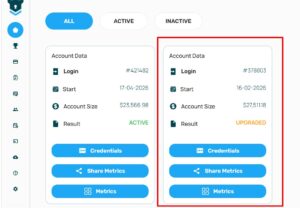
However, since I’ve passed other challenges before (see About the Project) and got funded accounts, let me tell you straight: these same principles are strictly followed in any other phase. 🎯 The only difference is the target numbers, but the psychology and math remain identical.
I passed the first stage in 2 months. I could have done it in one if I hadn't messed around. 🤦♂️ I clawed my way back from a -9% drawdown when I was just one wrong move away from being disqualified. Here’s what I realized: passing a challenge is 90% psychology and math.
By the way, some points might seem familiar to you. Well, if they do, it means they’re important—and it’s better to repeat them than to step on the same rake twice.
📉 The Input Data (Our Sandbox)
Let’s break everything down using a specific example of a 2-stage $25,000 challenge. This is the baseline for our calculations:
- 💰 Account: $25,000
- 🎯 Target (10%): $2,500
- 🛑 Max Drawdown (10%): $2,500 (Trailing)
- 📉 Daily Drawdown (5%): $1,250
- ⏳ Min Trading Days: 4 days (credited for a profit of +0.5% or $125 per session).
Alright, let’s dive in! 👇
🛡 The Four Components of Success
I’ve determined for myself that results rest on four pillars:
- Balance
- Mathematics
- Strategy
- Psychology
Remove one—and you turn into a sponsor for the prop company.
💸 I’m intentionally not mentioning market analysis: since you are ALREADY A TRADER, that should be your default setting. Even if it were a fifth component, I’d give it no more than 5%. The rest is the chemistry between your calculations and your discipline. 🧪
🏛 Pillar #1: Account Balance, or the Magic of Large Numbers
Many fear large accounts, but a balance of $25,000 or more is your best friend. 🤝
Why? When you take a challenge, you want to pass it, not blow it, right? 😉
A large balance cures flippancy. When “$50” is on the line, you’re playing a game. When a serious account is on the line, you involuntarily become a Manager. 💼
Responsibility for large numbers acts like a circuit breaker.
It prevents you from making impulsive trades out of boredom during the first three days. The higher the weight of the sum, the higher the filter for your entries. On a large account, you stop “button-mashing” and start waiting. ⏳
📌 In prop trading, waiting is what pays the best.
🧮 Pillar #2: Mathematics – A Cold Shower for Dreamers
I say this often on the Telegram channel, but I'll say it again: your 8-10% goal with a 10% drawdown limit is actually 80-100% of real profit, not 8-10% as many mistakenly believe.
⚠️ Remember this, drill it into your head, and understand it like 2+2.
For those not yet subscribed to Telegram or who haven't read previous posts: in a prop firm, you aren't trading a $25,000 or $150,000 balance. You are only trading the money they allow you to lose—the total drawdown. If an account is $10,000 and the total drawdown is 5%, you are only trading $500. All calculations are built on this logic. Only then does it become clear what kind of “beast” you’re dealing with. 📈
🏛 Why is Balance the first pillar?
I listed balance first for a reason. Your psychology and strategy depend directly on it. But to “tune” them correctly, we need calculations. Math provides a clear picture of reality. 🖼
Let’s put it simply:
- If your 10% goal is $500 (on a small $5,000 challenge), are you going to stretch that over 2–3 months? Of course not. Your brain will push you to “hit it hard” in a week, and the market will eat you alive. 🦈
- But when your 10% is $5,000 or even $10,000, you understand what you’re working for. A challenge like that can and should be passed over 2–3 months. Consider that at the end, you’ll simply be handed that $5–10k. Is it worth being patient for? You bet! 💰
🔢 The Math of Survival
Everything else is built on the balance: 👇
- 1️⃣ Risk per Trade: You begin to understand the “price” of every stop-loss in real dollars, not abstract pips. 💵
- 2️⃣ The Illusion of “Small” Profit: When you see a daily norm of 0.5%, your brain whispers: “Too little!” But look at it through the lens of risk capital: 0.5% a day of the total balance is 5% a day of your available drawdown. That’s insane profitability! 🚀 Stop devaluing small steps.
- 3️⃣ 🎮 The Magic of “Lives”: With a $1,250 daily limit, a 1% risk ($250) gives you 5 attempts to be wrong. A 2.5% risk gives you only two attempts for the day and just 4 attempts for the entire challenge. Math gives you the exact picture: how many times you can get hit in the face before you’re knocked out of the ring.
⛓️ Trailing vs. Static Total Drawdown
It’s vital to understand how the prop counts your “exit.” In my case, it was a Trailing Drawdown.
What does this mean? You cannot lose more than 10% of your maximum recorded balance. If you earned +$1,000, your disqualification threshold also moved up by $1,000.
The Result: It doesn't give you extra “lives.” It only enforces strict discipline. The drawdown “trails” behind you like a a tight leash, preventing you from relaxing after successful trades.
If you have a Static Drawdown—meaning the maximum limit grows along with your balance—you might fall into the trap of “going big” or getting stuck while trying to climb out. Sometimes it's easier to fail a challenge than to bounce back and forth.
Which drawdown to choose is up to you, but it is a crucial point when selecting a challenge and planning your path. 🪢
⚠️ The Equity/Balance Drawdown Trap
Many props now calculate the daily limit based on the higher of two values: Equity or Balance. For those who don't know: if you had an open profit of +$500, didn't close it, and the price returned to zero—to the system, you just LOST $500 from your peak balance. In a prop, “zero” doesn't always mean you lost nothing. 🛑 This is critical for your daily limit.
📌 Summary:
Mathematics isn't about formulas; it’s about an honest worldview. Without it, you aren't a manager; you’re just a gambler. 🎲
♟️ Pillar#3: Strategy – Your Chess Match
Many think strategy is just an entry and exit point.
📌 In reality, in a prop firm, strategy also involves the dynamics of your risk depending on where you are on the journey.
💡 Important Point:
I include analysis here as well. I don't write about it in detail only because it’s a general trader “must-have.” You should have it by default. In this article, I am only breaking down the nuances that don't exist in regular self-trading but decide everything within a challenge.
Regarding strategy, I use a chess analogy:
1️⃣ The Opening (0 to 2%) 🛡
The most critical zone. You have no “cushion”; you’re standing on the edge of a cliff.
Objective: Get into the green at any cost to breathe easier.
Tactics: Maximum caution. It’s important to start with a profit. This gives you psychological comfort.
Nuance: The first trade in profit is the foundation. Where there’s a first, a second usually follows. 😉 Anything can happen, but when the terminal looks good from the start, the chance of success is mathematically higher.
2️⃣ The Middlegame (2 to 8%) ⚔️
The main phase—a psychological stage where you realize you’re no longer on the edge.
Tactics: I’d recommend changing nothing that worked in the opening. 👉 Stability is your main asset. Yes, technically you can slightly increase risks (literally cosmetically), but I’d suggest keeping the core unchanged. If you found a working mechanic, don't reinvent the wheel.
3️⃣ The Endgame (8 to 9.5%) 📉
The home stretch. Prime time for euphoria traps.
There are usually three ways to finish the stage:
- Go all-in: since you have a “buffer” of profit. I strongly discourage this. I tried it—fell short, crashed, and it was very hard to climb back up. 🤕
- Stay steady: continue at the same rhythm.
- Reduce risks: to ensure you don't give back what you've earned.
My choice: Either stay steady or finish the remainder with small, confident steps. No need for “heroics” when the goal is one step away.
4️⃣ The Coda (9.5 to 10%) 💎
This stage might happen, or it might not—depends on luck. I had it. Five times I was about $100 away from the goal (I kept approaching and receding)!
Once, the price was only $35 away from the target, and I rolled back yet again. 🎢
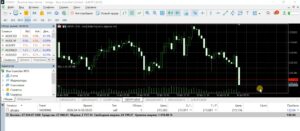
This part is up to you; I won’t give specific advice here on how to pass this phase. I ended up closing my challenge with one $300+ trade after a preliminary negative pullback. But if I could do it over—I wouldn't rush; I’d close those remainders in $50 chunks.
To Close the Trade or Not
I decided for myself: if a trade is +0.5% or higher—I can safely close it. But usually, I try to close at 1%+.
🎣 The “Fishing” Effect—Study Asset “Habits” Thoroughly
Don't try to trade everything that moves. Choose 1–3 instruments. You must know their “habits” like an old fisherman knows his lake. I stuck to specific pairs and Gold—this gives an understanding of their average daily range and typical traps.
By the way, traders who have also passed challenges often talk about this. We publish similar success stories, so don't forget to read them on our Telegram channel.
🌍 Geopolitics and Gaps
Forget “beautiful” position trades held over the weekend. Given the news from the Middle East, any gap on Monday could wipe out your challenge before the market even opens.
My rule: Zero positions on Saturday and Sunday. Sleep soundly. 🛌
🧠Pillar#3: Psychology – The Inside Battle
If math is the skeleton and strategy is the muscle, psychology is the nervous system of your trading. You can have a perfect plan, but if your hand shakes during a drawdown or, conversely, reaches for the “Buy” button in a peak of euphoria—everything will go to ruin.
I went through the hell of a -9% drawdown. That’s a state where you’re only 1% away from account “death,” and you physically feel your time and effort burning away. Here are my conclusions from that experience.
📉 1. A Drawdown is a Test, Not a Death Sentence
When you fall into a deep drawdown, your brain goes into survival mode. Two destructive desires emerge:
- “Revenge” trading: increasing the lot size to win it all back in one trade. This is the shortest path to failure.
- Freezing and giving up: becoming afraid of every trade.
How did I get out? I simply accepted the loss. I mentally “wrote off” the account and started trading as if it were a brand new challenge with a very small limit. Small steps, micro-profits. The psychology of recovery requires the precision of a surgeon, not the recklessness of a gambler. If you find yourself in a hole, the first rule is to stop digging.
😴 2. “Trader's Sleep”—Your Most Important Technical Indicator
If you go to bed and can't fall asleep because you're thinking about an open trade—your volume is too high. If you wake up at 3 AM to check the terminal—you've exceeded your psychological capacity.
Your nervous system is a limited resource. Once trading starts eating into your sleep and personal life, you start making mistakes. The best trade is the one you forgot about after setting the stop and take-profit.
👺 3. Tilt and “Last Dollar Syndrome”
The most dangerous moment is when you are $50–$100 away from the goal. I wrote about this in the strategy section, but the root of the problem is in the head.
You start trading the “number in the dashboard” instead of the chart.
You try to force the market to fit your expectations: “Come on, just a little more to the target!”
At this moment, you are most vulnerable. The market doesn't know how much you have left to pass the challenge, and it doesn't care. The ability to not rush at the finish line is the pinnacle of self-control.
🔥 Summary: Why Prop Firms are the Best School?
Passing a challenge is not just about the chance to earn. Above all, it’s a transition to a different level of thinking and managing entrusted funds.
Over time, it becomes clear that the key value here is not a one-time result, but the formation of a stable approach to trading that allows for long-term earnings.
Why do these principles work everywhere?
I said it at the beginning and I’ll say it now: it doesn't matter if you're in Phase 1 or already working on Phase 2. The math stays the same (targets might just be slightly lower). The pressure of psychology doesn't go away. The market doesn't change the rules of the game just because you changed stages.
My Final Advice
If you decide to take a challenge, be prepared for it to hurt. It will be long. You will make mistakes, act foolishly, and possibly fall into deep drawdowns. But if you keep these 4 pillars in mind:
- Balance (Awareness of manager responsibility).
- Mathematics (Understanding that you are trading 100% of risk capital).
- Strategy (Clear understanding of the chess match phases).
- Psychology (Control over emotions and your state of mind).
…then that coveted message “Congratulations! You passed the challenge” will only be a matter of time.
I wrote this while it was fresh to record this experience not just for you, but for myself. Trading is a lifelong journey, and the challenge is just one of its steps.
P.S. If this article was useful to you—bookmark it. During a drawdown, re-read the section on psychology. It helps you sober up.
See you at the payout time!